Urban Design Research · Final Report 设计课题研究 · 终期汇报

Spatiotemporal Characteristics and Influencing Factors of Bike-Sharing Integration with Rail Transit 共享单车接驳轨道交通的
时空特征与影响因素研究

A Study on the Spatiotemporal Characteristics and Influencing Factors of Bike-Sharing Integration with Rail Transit — A Case Study of Tianjin 共享单车接驳轨道交通时空特征与影响因素——以天津市为例

苏琪 · 郭函祎 · 郭雅洁 · 崔馨元 Advisor: Prof. Ren Lijian 指导教师:任利剑 School of Architecture, Tianjin University 天津大学建筑学院
01 · Research Background

Research Background 研究背景

The integration of bike-sharing with urban rail transit has become a key topic in urban green mobility, yet their coordinated development faces many challenges. 共享单车与城市轨道交通融合成为城市绿色出行的关键议题,然而二者的协同发展面临诸多挑战。

Background 1
Context 01 背景 01

National Green Mobility Policy 国家倡导绿色出行方式

The Green Commuting Action Plan explicitly guides the public to prioritize public transit, walking, and cycling as green travel modes. 《绿色出行创建行动方案》明确引导公众优先选择公共交通、步行和自行车等绿色出行方式

Background 2
Context 02 背景 02

Bike-Sharing Transforms Transfer Patterns 共享单车改变换乘格局

Fills the "too far to walk, too expensive to taxi" gap between metro and destinations, extending the metro's effective service radius. 填补地铁与目的地之间"走路不近、打车费钱"的尴尬距离,扩大地铁核心服务半径

Background 3
Context 03 背景 03

Rail Feeder Faces Challenges 接驳轨道交通面临挑战

Issues such as insufficient parking space, tidal flow, disorderly parking, fierce operator competition, and lagging regulation urgently need to be addressed. 停车空间不足、潮汐现象、无序停放、企业恶性竞争、监管滞后等问题亟待解决

Metro station areas are the most active zones for bike-sharing, accounting for about 40% of citywide trips. Cycling orders near Tianjin's rail network account for 31.1% of all trips; in 2021, a cumulative 256 million rides were recorded with a total distance of 383 million km. Dedicated research on Tianjin remains scarce. 地铁站周边是共享单车最主要的活跃区域,占全市出行总量约 40%。天津市轨道周边骑行订单占比 31.1%,2021 年累计骑行 2.56 亿人次,总里程 3.83 亿 km。针对天津的专项研究仍较为缺乏。

Research Objectives 研究目的

① Reveal the spatiotemporal patterns of bike-sharing as a rail transit feeder (behavioral characteristics + service-area characteristics) ① 揭示共享单车接驳轨道交通的时空规律(接驳行为特征 + 接驳范围特征)

② Investigate differences across station types and identify influencing factors for each category ② 探究不同类型站点的差异,分类识别共享单车接驳影响因素

③ Propose differentiated optimization guidelines to support government policy-making and operator strategy ③ 分类提出优化导则,为政府制定政策、企业制定运营策略提供依据

Three Innovations 三大创新点

🔍 Refined Service Area:精细化服务范围: HDBSCAN + kernel density + contour lines replace the traditional simple buffer, accurately identifying each station's actual feeder service area.HDBSCAN + 核密度 + 等值线替代传统简单缓冲区,精准识别各站实际接驳服务范围

📊 Composite Feeder Capability Index:综合接驳能力指标: TOPSIS method introduced to quantify feeder volume, modal share, and service area comprehensively.引入 TOPSIS 法综合量化接驳量、分担率、服务范围

🗂️ Station Classification:分类站点探讨: Differentiated characteristic analysis and optimization strategies for residential, commercial, and mixed-use station types.居住 · 商业 · 混合三类站点差异化特征分析与优化策略

02 · Study Area & Data

Study Area & Data 研究区域与数据

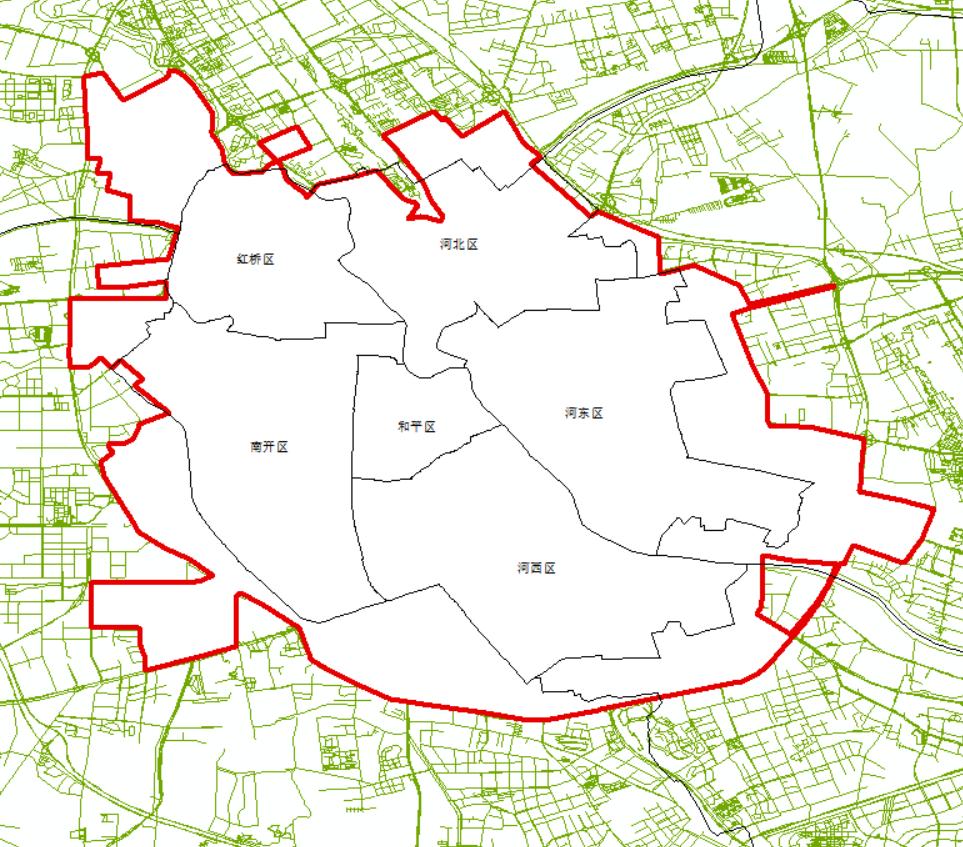
Six central districts of Tianjin plus parts of four surrounding districts, intersected with coverage of three operators, using November 2022 weekday and weekend cycling OD data as the core data source. 天津市内六区 + 环城四区部分区域,取三家运营商覆盖范围交集,以 2022 年 11 月工作日及周末骑行 OD 数据为核心数据源。

Study Area
Fig. 1 Study area — six central districts of Tianjin (Nankai, Heping, Hedong, Hexi, Hebei, Hongqiao) plus parts of four surrounding districts 图1 研究范围——天津市内六区(南开、和平、河东、河西、河北、红桥)+ 环城四区部分区域
Rail Transit Network
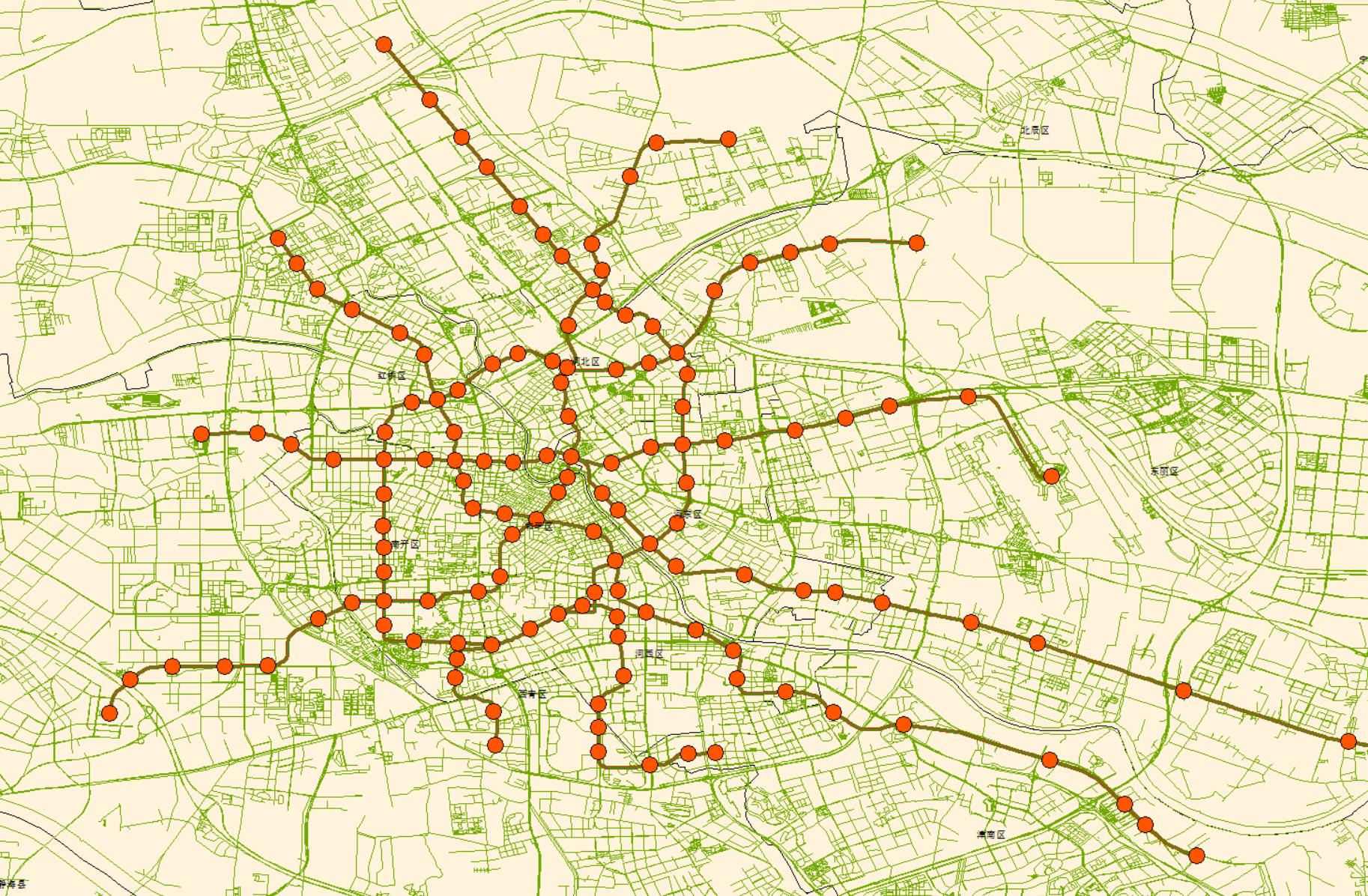
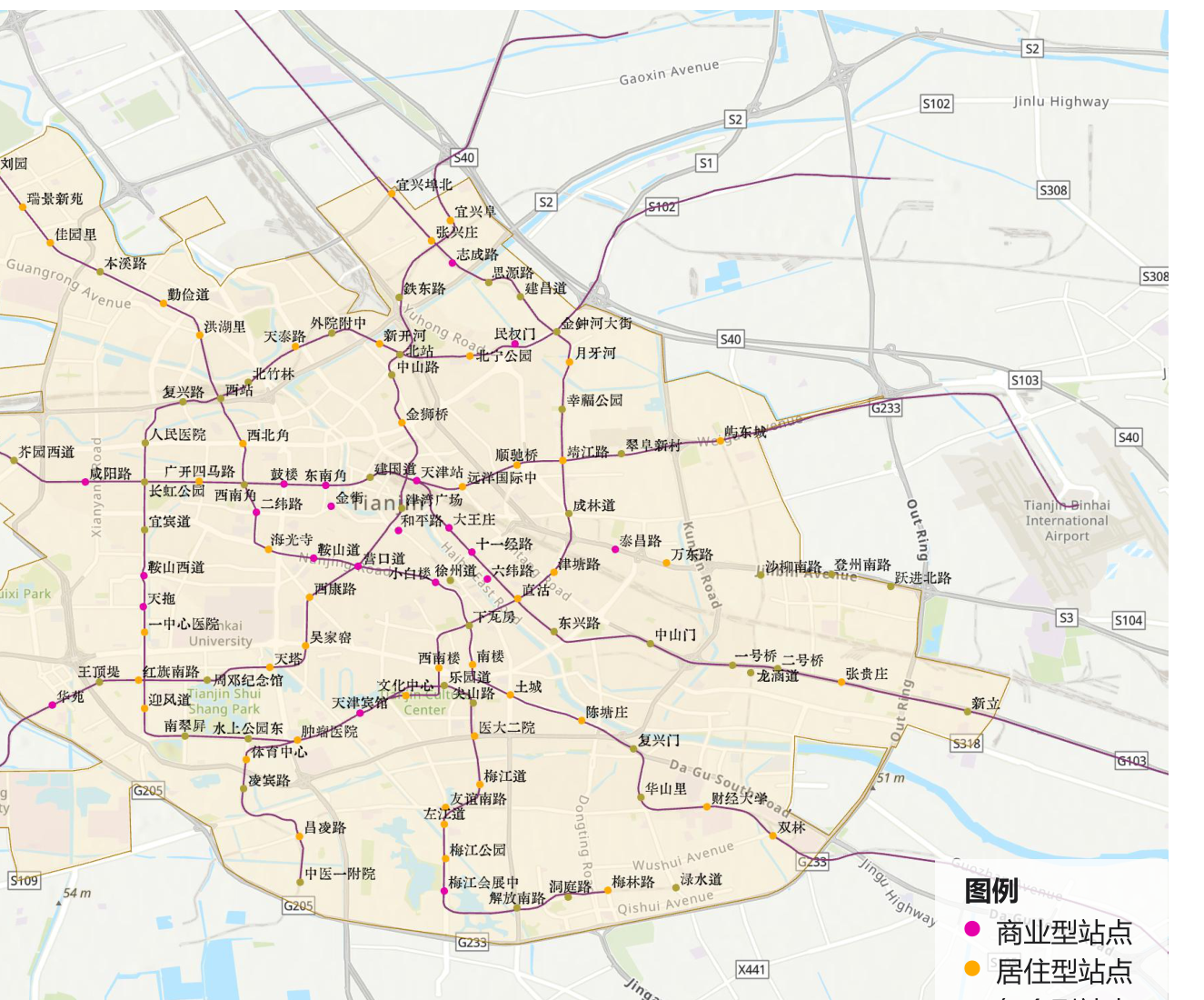
Fig. 2 Tianjin metro network — 113 stations and 364 exits within the study area 图2 天津市地铁网络——研究范围内共 113 个站点、364 个出站口
113
Metro stations地铁站点
364
Station exits出站口
138.8k
Weekday rides工作日骑行数据
106.1k
Weekend rides周末骑行数据

Data Types 数据类型

Bike-sharing OD data共享单车骑行 OD 数据 Mobile signaling data (home/work)手机信令数据(职住) Metro station POI地铁站点 POI Land use data土地利用数据 OSM road network路网 Building footprints & floors建筑轮廓 & 层数 Metro tap-in/tap-out data地铁刷卡进出站数据 Meituan · Qingju · Hellobike service areas美团 · 青桔 · 哈罗运营范围

Buffer Zone Delineation 缓冲区划定

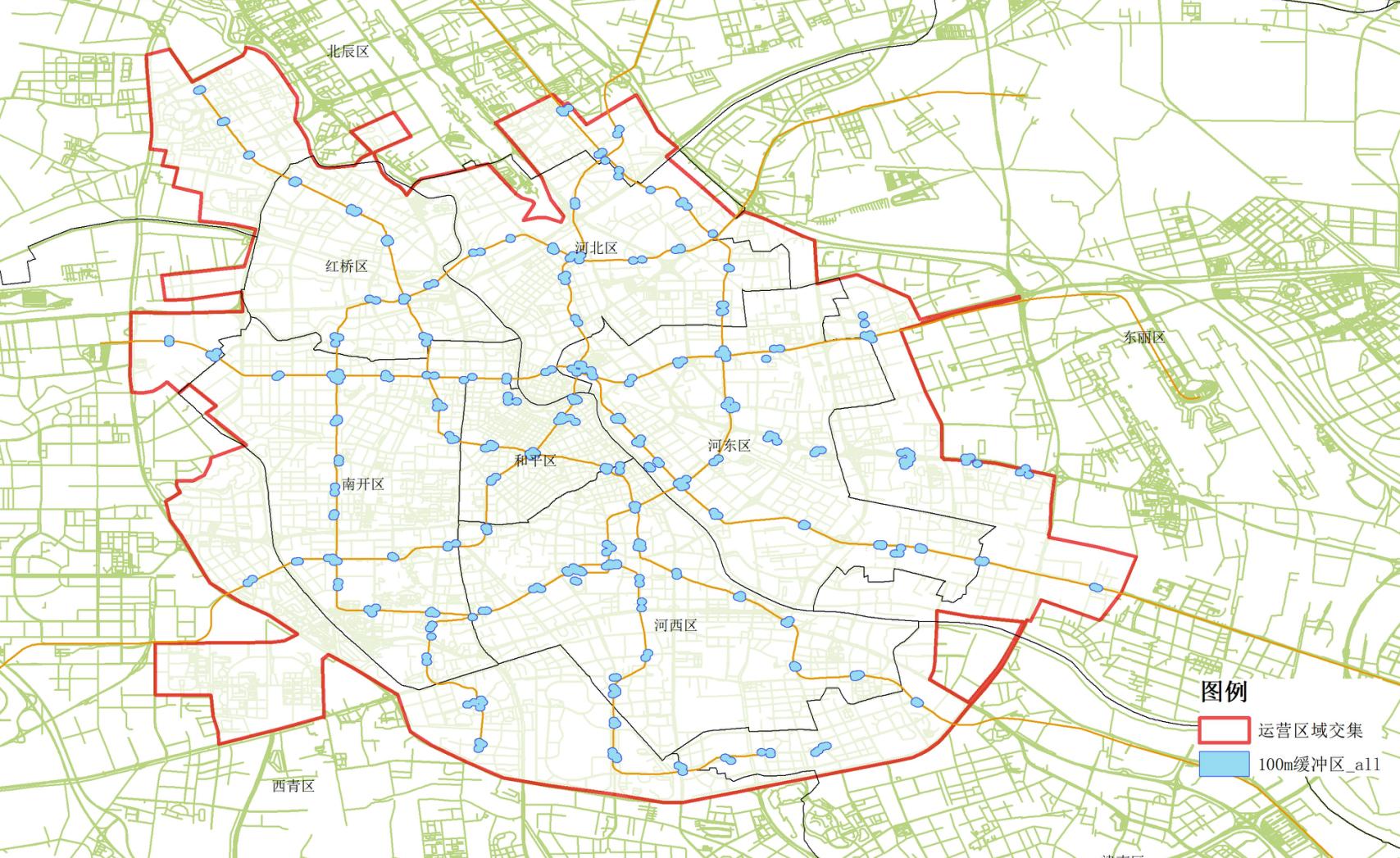
After comparing multiple methods from the literature, a 100 m buffer around each metro exit is used as the valid feeder judgment area; 364 buffer polygons were merged to cover all 113 metro stations. 对比多种文献方法后,以地铁出站口 100m 缓冲区作为有效接驳判定范围,生成 364 个缓冲面后合并,覆盖 113 个地铁站点。

Study Area Map
Fig. 3 Study area overlaid with 100 m buffer zones 图3 研究范围与 100m 缓冲区叠合示意

03 · Spatiotemporal Characteristics

Spatiotemporal Characteristics Analysis 接驳时空特征分析

Analyzing feeder behavioral differences between weekdays and weekends across three dimensions — feeder frequency, ride duration, and ride distance — with spatial distribution visualizations. 从接驳频率、骑行时长、骑行距离三个维度分析工作日与周末的接驳行为差异,并可视化空间分布规律。

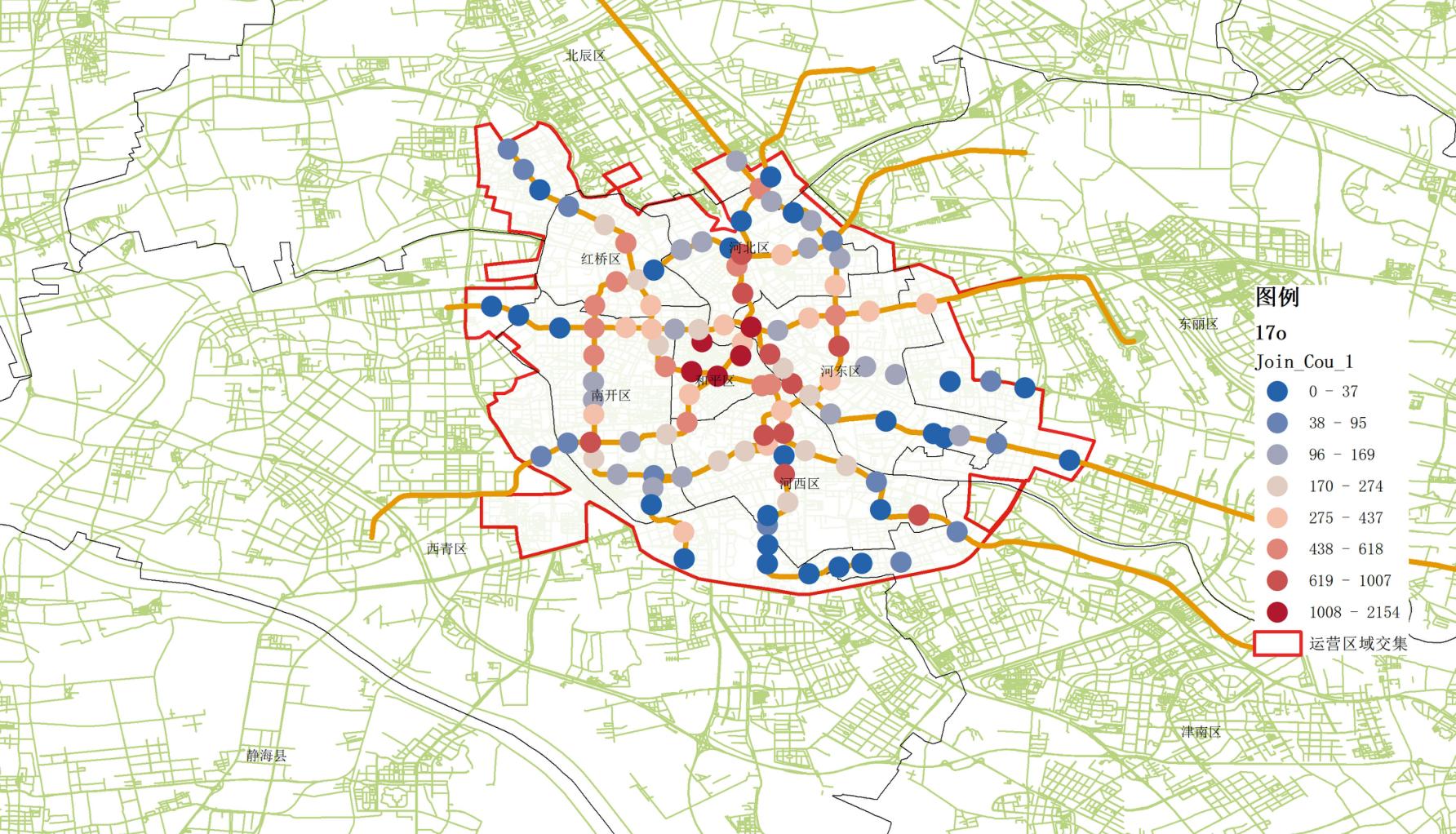
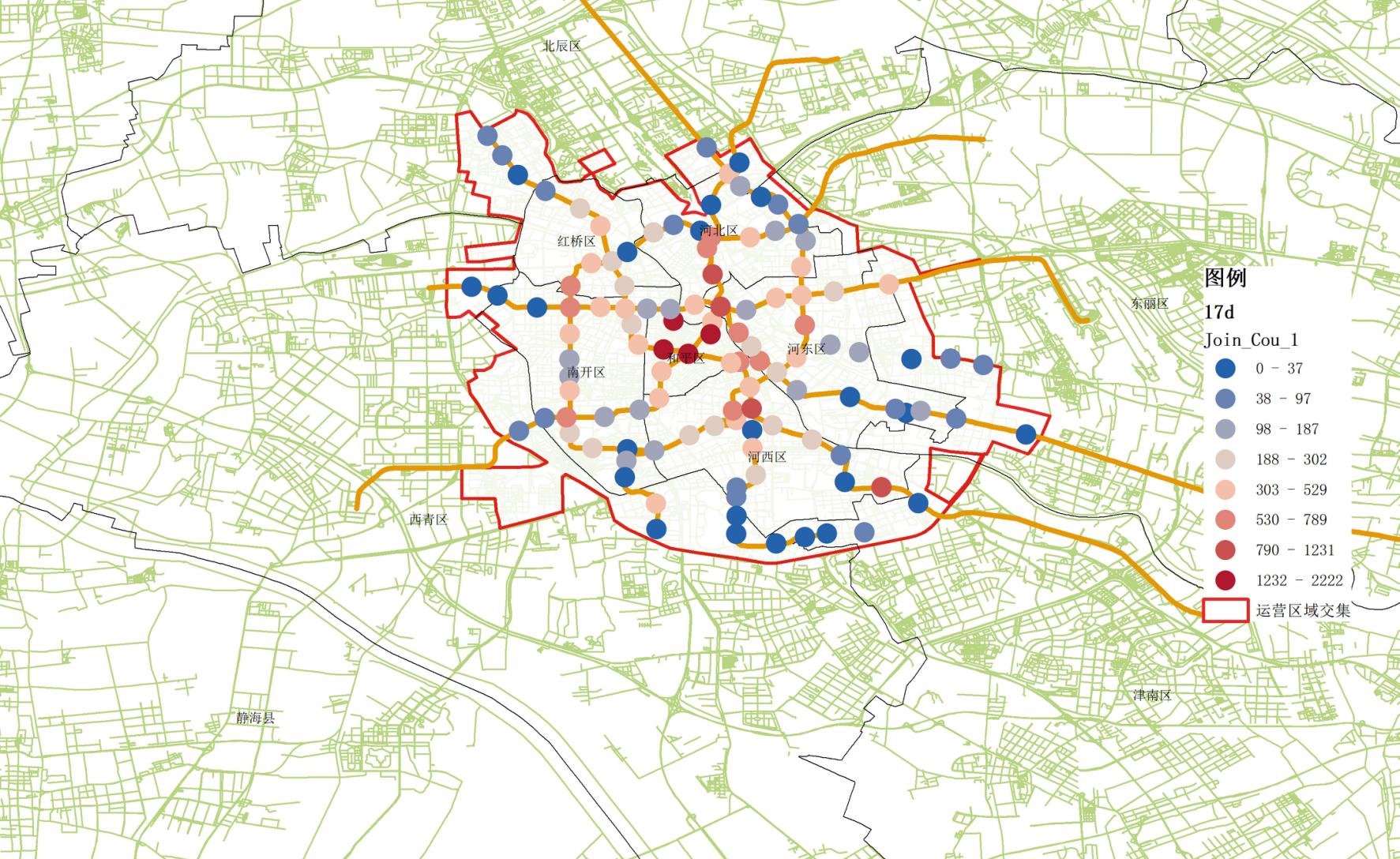
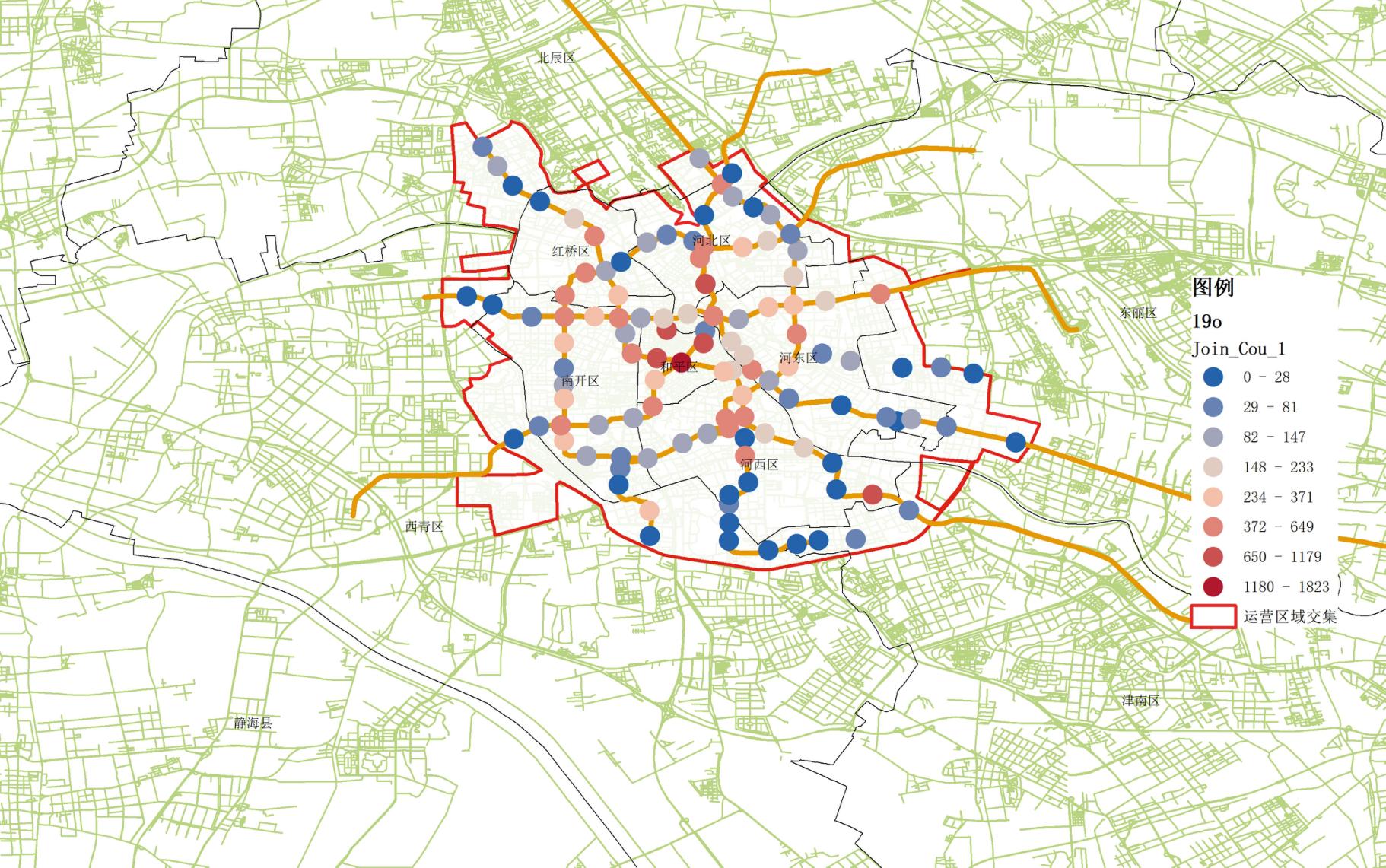
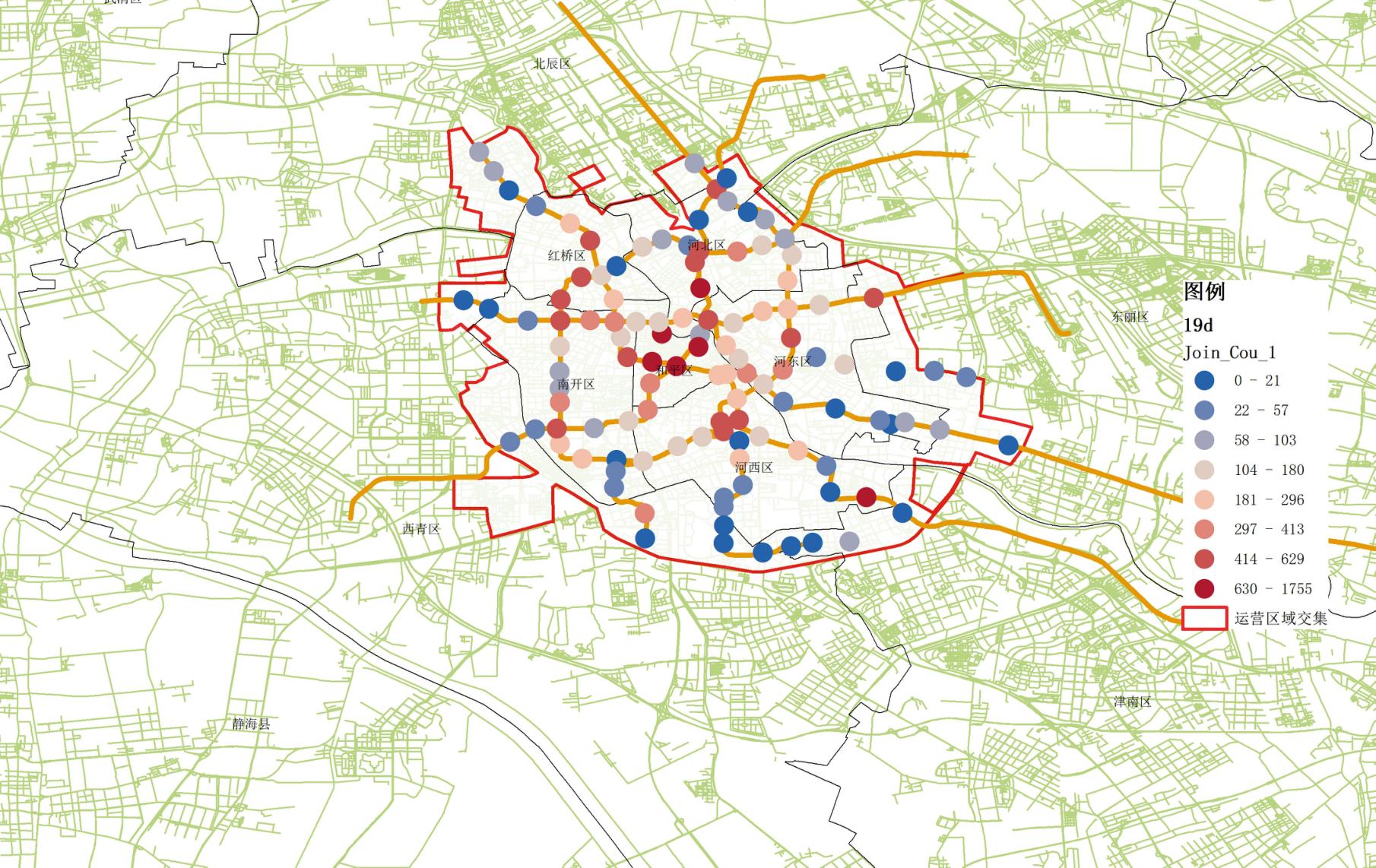
Spatial Distribution of Feeder Volume — Weekday vs Weekend (Origin & Destination) 接驳量空间分布——工作日 vs 周末(起点 & 终点)
Weekday · Origin (17o) 工作日 · 起点(17o)
Weekday origin feeder volume
Weekday · Destination (17d) 工作日 · 终点(17d)
Weekday destination feeder volume
Weekend · Origin (19o) 周末 · 起点(19o)
Weekend origin feeder volume
Weekend · Destination (19d) 周末 · 终点(19d)
Weekend destination feeder volume

Fig. 4 Spatial distribution of bike-sharing feeder volume at Tianjin metro stations — bubble size represents feeder volume; color depth indicates magnitude 图4 天津市各地铁站共享单车接驳量空间分布——气泡大小代表接驳量,颜色深浅表示数量级别

Weekdays: higher feeder volume with hotspots in a clear radial pattern centered on Heping District; Weekends: volume decreases and the core expands from Heping to Nankai and Hongqiao, reflecting leisure travel characteristics. Feeder frequency concentrates at 250–1,000 trips/day; the highest single station (Yingkoudao) reaches 2,222 trips on weekdays. 工作日:接驳量更高,热点呈明显放射状(以和平区为核心);周末:接驳量下降,核心范围由和平区扩展至南开、红桥三区,休闲出行特征明显。接驳频率集中在 250–1000 次/日,最高单站(营口道)工作日达 2222 条
Ride Duration and Distance Characteristics 骑行时长与距离特征

Ride Duration 骑行时长

Both weekday and weekend ride times concentrate at 5–10 minutes with fairly uniform distribution. Some peripheral stations outside the service area have shorter average durations (< 5 min); a few edge stations show unusually long rides. 工作日与周末骑行时间均集中在 5–10 分钟,分布较为均匀。运营范围外围部分站点平均时长偏短(<5 min),个别边缘站点异常偏长。

810 s
Avg. weekday duration工作日平均时长
835 s
Avg. weekend duration周末平均时长

Ride Distance 骑行距离

Both weekday and weekend ride distances concentrate within 2 km with uniform distribution. Peripheral stations show smaller average distances (< 1 km); weekday distances are slightly greater than weekend distances. 工作日与周末骑行距离均集中在 2 km 以内,分布均匀。外围站点平均骑行距离偏小(<1 km),工作日骑行距离略大于周末。

1563 m
Avg. weekday distance工作日平均距离
1527 m
Avg. weekend distance周末平均距离

04 · Service Area Analysis

Service Area Analysis 接驳服务范围分析

Breaking through the limitations of traditional buffer zones, combining HDBSCAN clustering, kernel density analysis, and contour delineation to precisely identify the actual feeder service area of each station. 突破传统缓冲区局限,综合运用 HDBSCAN 聚类、核密度分析、等值线划定等方法,精细化识别各站点实际接驳服务范围。

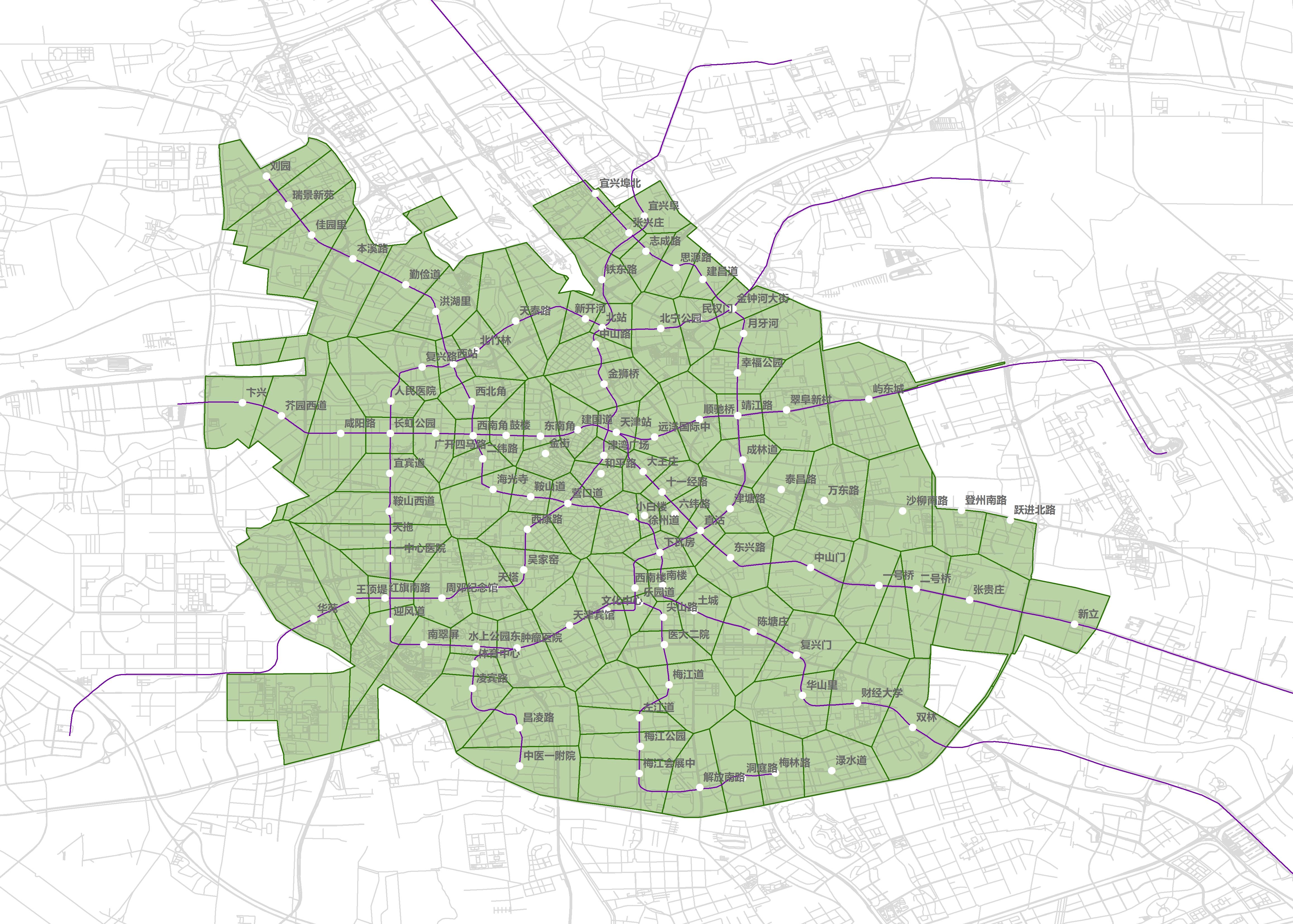
Voronoi theoretical service area
Fig. 5 Theoretical feeder service areas delineated by Voronoi polygons — full coverage of 113 stations 图5 泰森多边形划定的理论接驳服务范围——113 个站点全覆盖
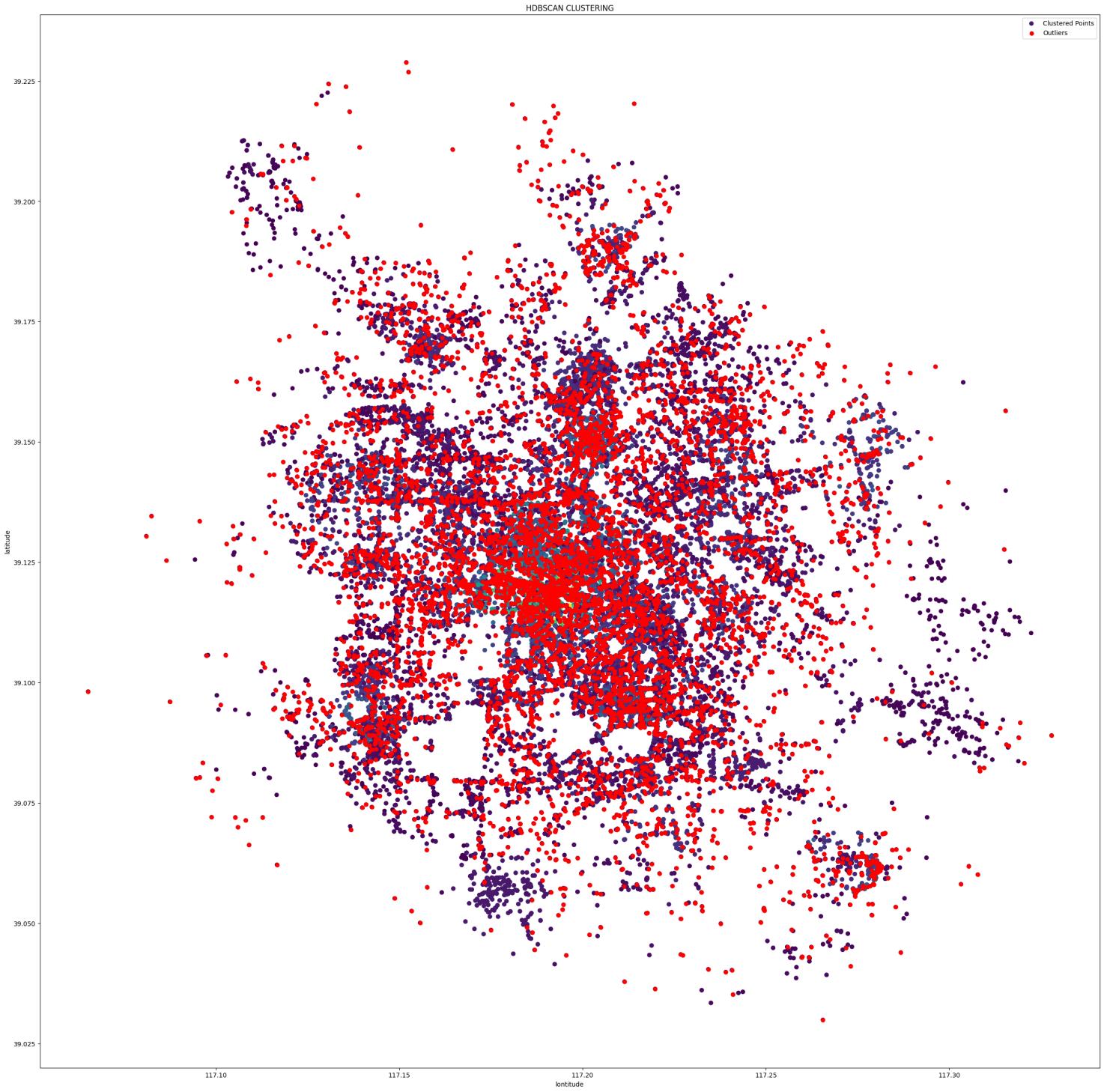
HDBSCAN clustering
Fig. 6 HDBSCAN clustering results — red: core points; blue-purple: outliers (silhouette coefficient 0.64–0.66) 图6 HDBSCAN 聚类结果——红色为正常值,蓝紫色为离散点(轮廓系数 0.64–0.66)
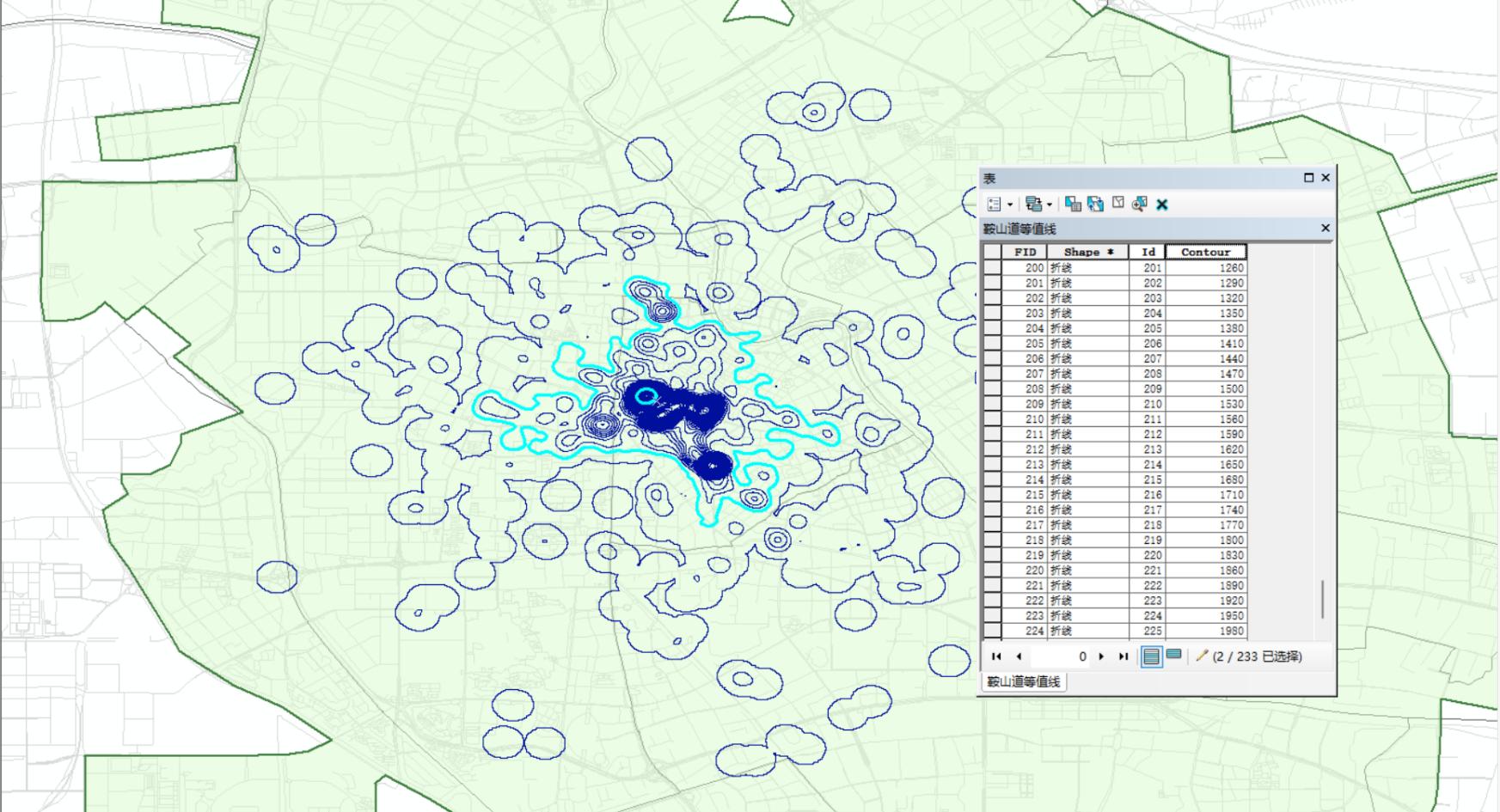
Kernel density and contours
Fig. 7 Kernel density analysis + contour delineation (d=30) + 10%/90% quantiles to determine actual service area boundaries 图7 核密度分析 + 等值线划定(d=30)+ 10%/90% 分位数确定实际接驳服务范围边界

Analysis Workflow 分析技术流程

1
Group by station; compute Euclidean distances between cycling OD points 按站点分组,计算骑行 OD 点之间欧式距离
2
HDBSCAN clustering (min_cluster_size=10) to identify and remove outliers HDBSCAN 聚类(min_cluster_size=10)识别离散点并清洗
3
Kernel density analysis → contour delineation (d=30) 核密度分析 → 等值线划定(d=30)
4
Extract 10%/90% quantiles to determine service area boundaries 10%/90% 分位数提取确定服务范围边界
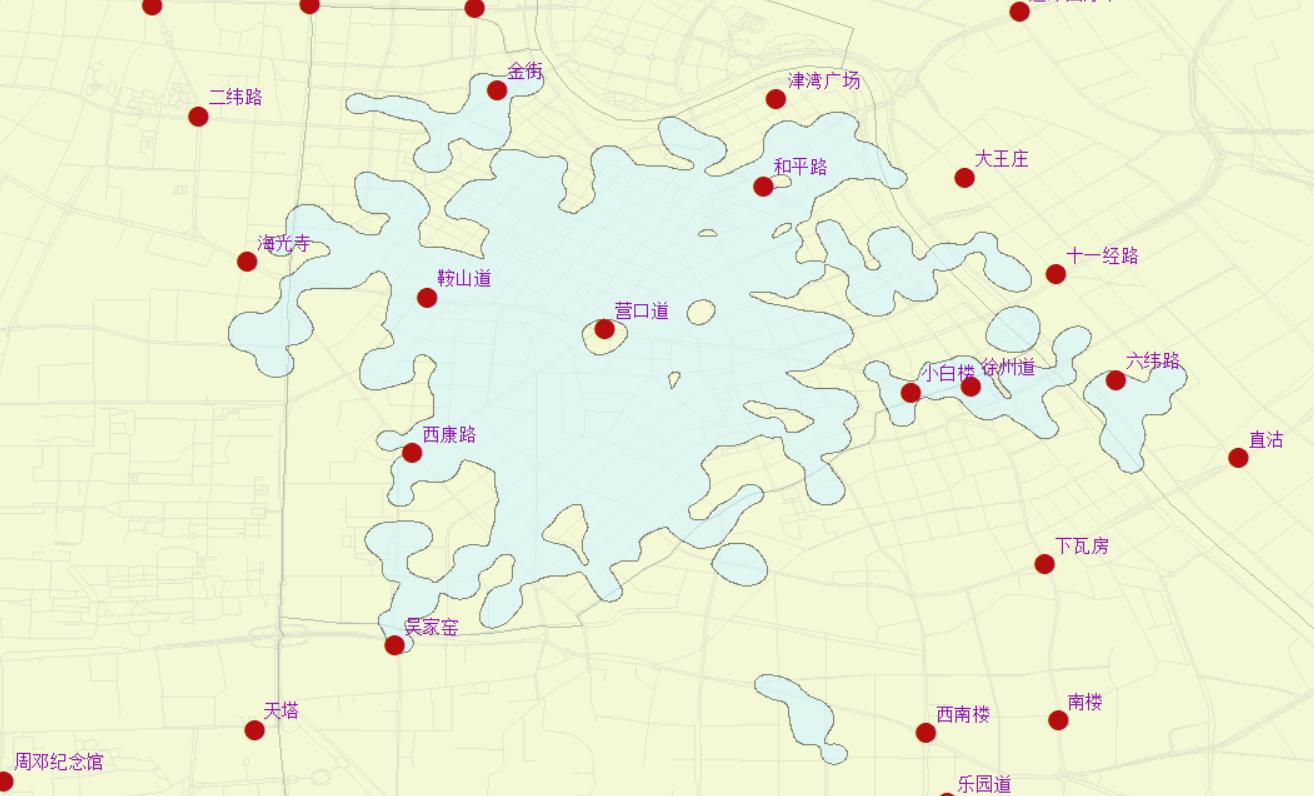
Service Area Morphology — Four Types 服务范围形态分类——四种类型
Service area type diagram
Fig. 8 Four service area morphologies — Radial Expansion (core stations around Yingkoudao) · Eccentric Expansion · Linear Expansion · Multi-core 图8 接驳服务范围四种形态——放射扩展型(营口道一带核心站)· 偏心扩展型 · 带状扩展型 · 多核心型

Radial Expansion 放射扩展型

Spreads uniformly in all directions from the station; common at high-volume core stations. 以站点为中心,各方向扩散均匀;常见于接驳量最高的核心站点

Eccentric Expansion 偏心扩展型

Feeder trips concentrate in a specific direction, strongly influenced by nearby major attractors. 接驳多集中在某一特定方向,受周边大型吸引点影响明显

Linear Expansion 带状扩展型

Extends along a specific axis (road / metro line) in both directions. 沿特定轴线(道路 / 地铁线路)向两端延伸

Multi-core 多核心型

Multiple high-density cycling zones; common at mixed-use stations with dispersed feeder patterns. 存在多个骑行高密度区域,多见于混合类站点,接驳形态分散

05 · Station Classification

Station Classification and Feeder Characteristic Comparison 地铁站点分类与接驳特征比较

Based on land use within each station's buffer zone, the 113 metro stations are classified into three types, and the composite feeder capability of each station is calculated. 依据站点缓冲区内土地利用情况,将 113 个地铁站划分为三类,并计算各站综合接驳能力。

45
Residential Stations 居住类站点
Residential land ≥ 40% 居住用地占比 ≥ 40%
21
Commercial Stations 商业类站点
Commercial/business land ≥ 15% 商业商务用地占比 ≥ 15%
47
Mixed-use Stations 混合类站点
All other stations 其余站点
Residential stations have the highest feeder demand, with weekend feeder volume and average ride time exceeding weekdays; commercial and mixed-use stations both show weekday > weekend patterns. 居住类站点接驳需求最高,且其周末接驳量与平均骑行时间均大于工作日;商业 / 混合类站点均为工作日 > 周末。
Metric指标 Residential居住类 Commercial商业类 Mixed-use混合类
Weekend feeder ratio (d)周末接驳比(d) 44.2% 17.8% 35.5%
Weekday feeder ratio (o)工作日接驳比(o) 39.8% 33.8% 26.5%
Dominant morphology主导形态类型 Radial / Eccentric放射 / 偏心 Eccentric expansion偏心扩展 Multi-core多核心
Density core concentration密度核心集中 Residential areas · Schools居住区 · 学校 Commercial office buildings商务办公楼 Multiple mixed types多类型混杂
Station classification map
Fig. 9 Classification map of Tianjin metro stations (pink = commercial · yellow = residential; mixed-use stations not highlighted) 图9 天津市地铁站分类分布图(粉色 = 商业类 · 黄色 = 居住类,混合类未标色)
Composite Feeder Capability (TOPSIS Method) 综合接驳能力计算(TOPSIS 法)
Composite Feeder Capability = 28.89% × Service Area + 40.96% × Feeder Volume + 30.15% × Modal Share 综合接驳能力 = 28.89% × 接驳范围面积 + 40.96% × 接驳量 + 30.15% × 交通分担率
Modal Share = Feeder Volume / Metro tap-in count  |  Feeder volume carries the highest weight (40.96%) 交通分担率 = 接驳量 / 地铁进站刷卡量  |  接驳量权重最高(40.96%)

06 · Influencing Factors

Influencing Factors Analysis 共享单车接驳影响因素分析

Based on the "5D" built environment framework with 19 indicators, OLS regression is used for quantitative analysis, supplemented by in-depth qualitative case studies of individual stations. 基于"5D"建成环境框架构建 19 个指标,通过 OLS 回归进行定量分析,并结合站点案例深入定性解读。

Quantitative Analysis — OLS Regression 定量探究——OLS 回归分析
OLS regression results
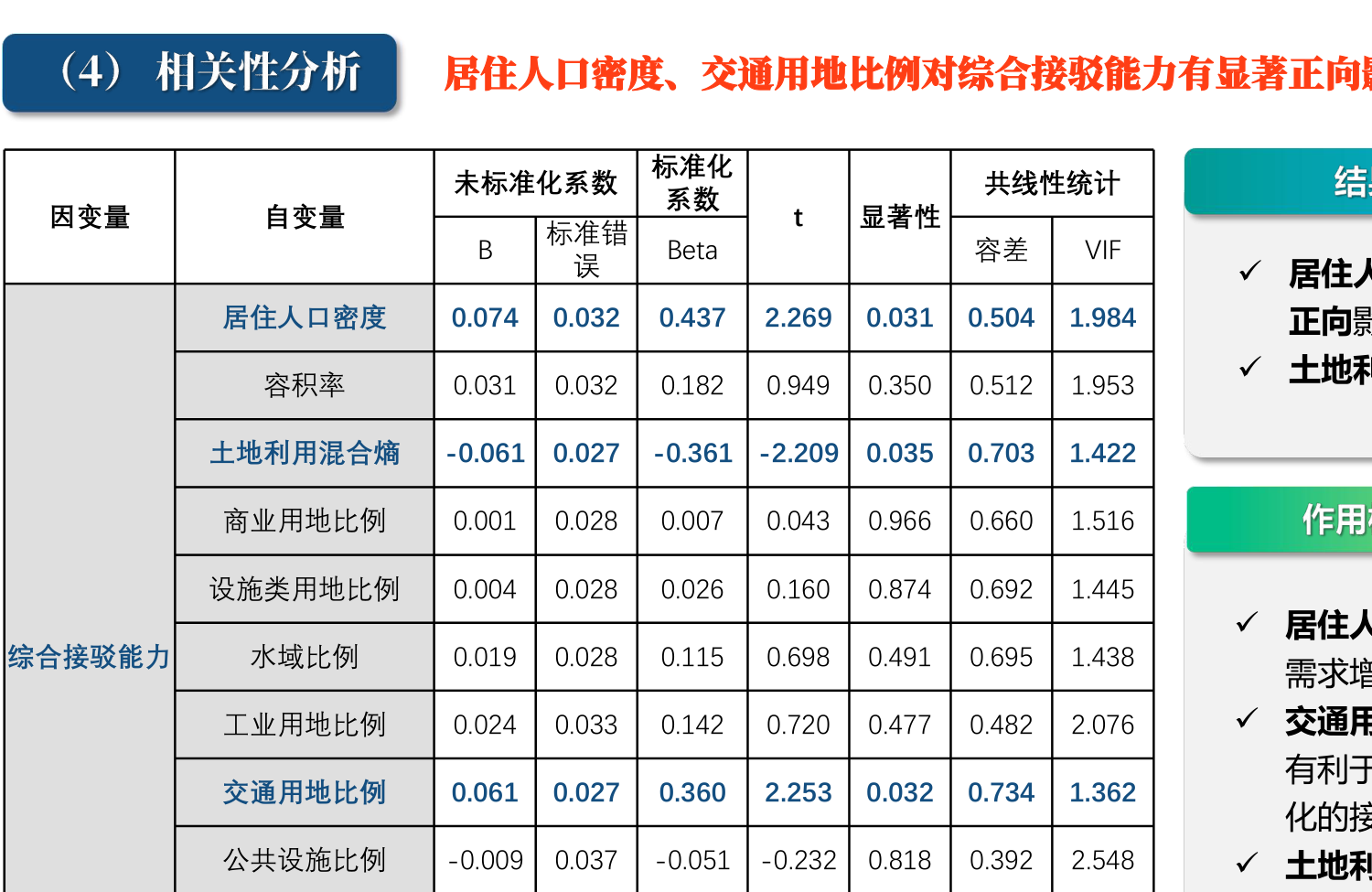
Fig. 10 OLS regression results (overall model p = 0.043, statistically significant) 图10 OLS 回归分析结果(模型总体 p=0.043,具备显著性)
Positive significant ↑正向显著 ↑

Residential population density (β = 0.437)居住人口密度(β = 0.437)

Strongest influence. Densely populated areas generate higher transit feeder demand; bike-sharing infrastructure tends to concentrate there, creating a virtuous cycle. 影响强度最大。人口密集区公交接驳需求增加,共享单车设施投放相对集中,形成良性循环。

Positive significant ↑正向显著 ↑

Transportation land-use ratio (β = 0.360)交通用地比例(β = 0.360)

Higher transportation land ratio correlates with denser road networks, supporting better slow-mobility cycling environments and integrated feeder networks. 交通用地比例增加,路网密度相对较高,有利于营造良好的慢行骑行环境,构建一体化接驳网络。

Negative significant ↓负向显著 ↓

Land-use mix entropy (β = −0.361)土地利用混合熵(β = −0.361)

Excessive land-use mixing disperses traffic flows, leads to uneven bike-sharing distribution and overly complex road networks, reducing overall feeder efficiency. 功能过度混合导致区域内交通流向分散、共享单车分布不均、路网过度复杂化,影响接驳整体效率。

Qualitative Analysis — Residential Stations (Xinanlou & Haiguangsi) 定性解读——居住类站点(以西南楼、海光寺为例)
Residential station cases
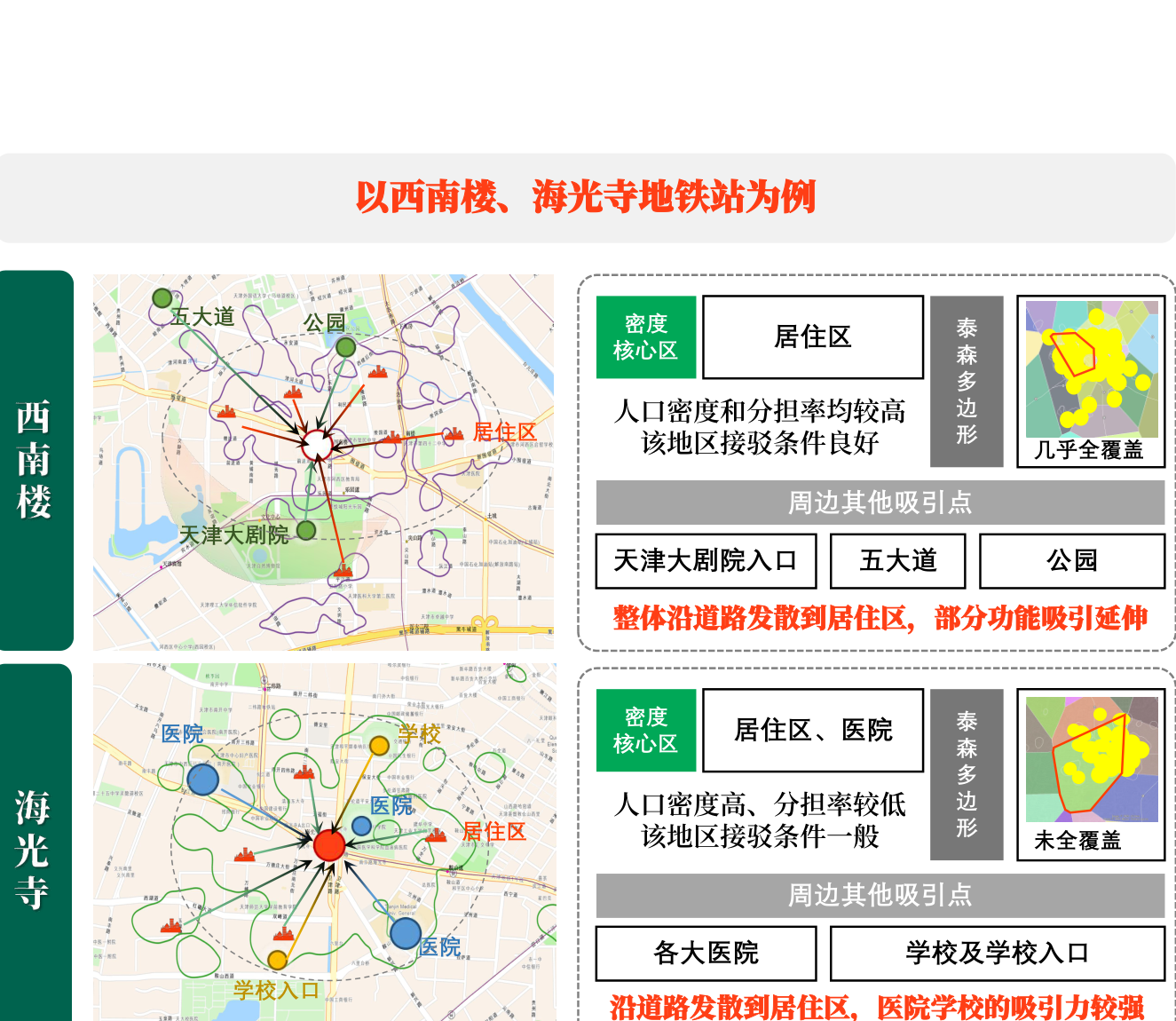
Fig. 11 Residential station feeder patterns: Xinanlou (good feeder conditions) vs Haiguangsi (multiple attractors lead to lower modal share) 图11 居住类站点接驳形态解读:西南楼(接驳条件良好)vs 海光寺(多吸引点导致分担率偏低)
At residential stations, feeder origins and destinations are relatively evenly distributed, and the overall pattern radiates along roads toward residential areas. School entrances, hospitals, and parks create local attraction or repulsion effects on cycling routes but do not change the overall morphology. 居住类站点中,接驳起讫点较为均匀,整体沿道路发散至居住区。学校入口、医院、公园等功能对骑行路径产生局部吸引或排斥作用,但不改变整体形态。

Xinanlou Station — Good Feeder Conditions 西南楼站——接驳条件良好

Both population density and modal share are relatively high; service area nearly covers the full Voronoi polygon; the Tianjin Grand Theatre, Italian Style Street, and parks create extended attraction zones. 人口密度和分担率均较高;整体几乎全覆盖泰森多边形范围;天津大剧院、五大道、公园等形成吸引延伸。

Haiguangsi Station — Average Feeder Conditions 海光寺站——接驳条件一般

Multiple hospitals and schools generate strong attraction; high population density but relatively low modal share; service area does not fully cover the Voronoi zone; cycling environment needs improvement. 各大医院、学校形成较强吸引,人口密度高但分担率较低;服务范围未全覆盖,骑行环境有待提升。

Qualitative Analysis — Commercial Stations (Xiaobailou & Tianjin Railway Station) 定性解读——商业类站点(以小白楼、天津站为例)
Commercial station cases
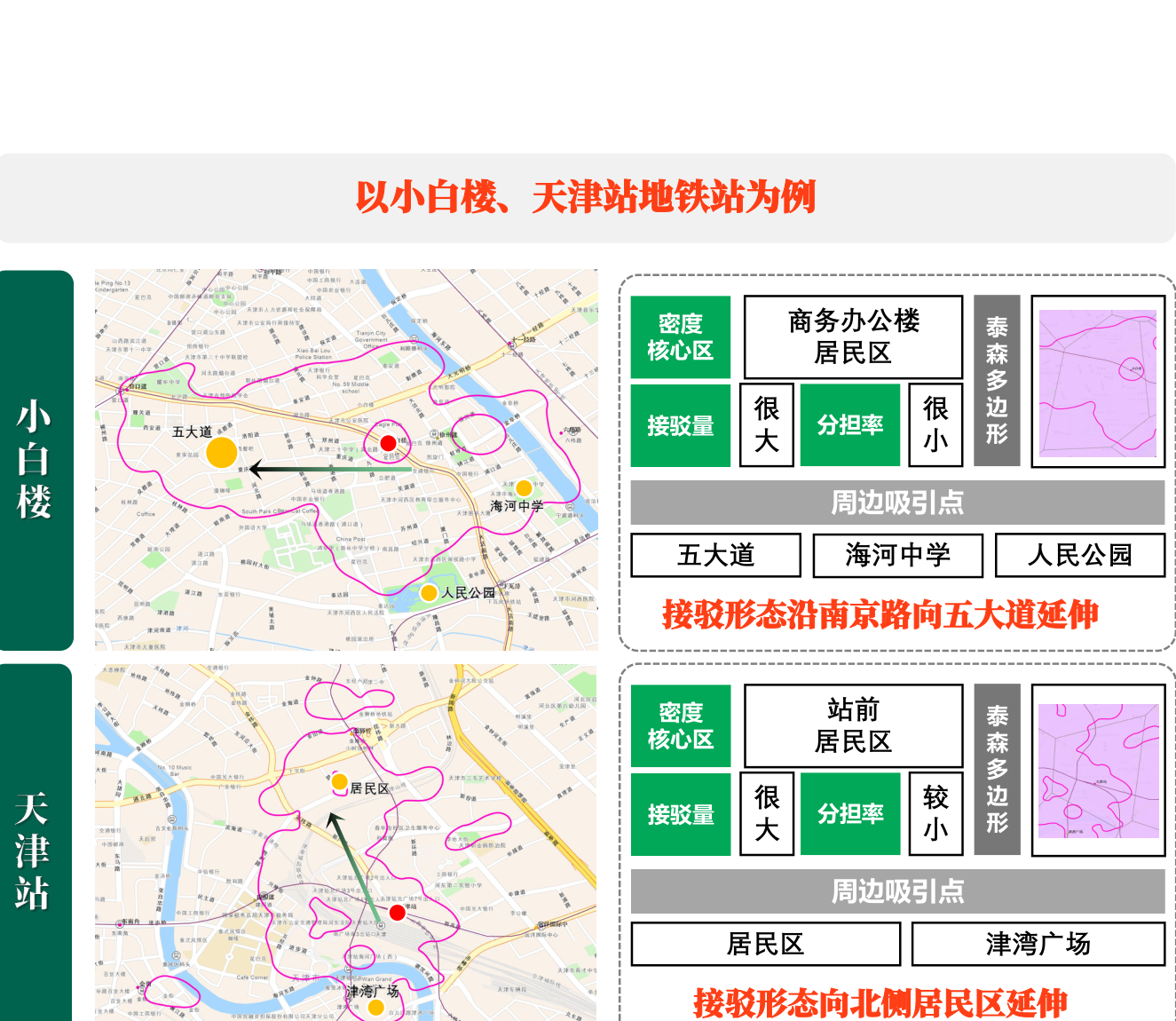
Fig. 12 Commercial stations: density cores skew toward office buildings; feeder pattern shows eccentric expansion 图12 商业类站点:密度核心偏向商务办公楼,接驳形态呈偏心扩展
The density cores of commercial stations are mostly located in nearby commercial office buildings, with feeder patterns skewing toward high-attraction zones. Some high-density areas are far from metro exits, indicating a need to improve intermediate cycling routes. 商业类站点密度核心多位于周边商务办公楼,接驳形态向强吸引区域偏移,部分密度高值区距地铁出口较远,提示需改善中间骑行路径。

Xiaobailou Station 小白楼站

High feeder volume, low modal share; pattern extends along Nanjing Road toward the Italian Style Street area; Haihe Middle School and People's Park serve as nearby attractors. 接驳量大、分担率小;形态沿南京路向五大道延伸;周边有海河中学、人民公园等吸引点。

Tianjin Railway Station 天津站

High feeder volume, relatively low modal share; feeder pattern extends northward toward residential areas; Jinwan Plaza is an important attractor. 接驳量大、分担率较小;接驳形态向北侧居民区延伸;津湾广场作为重要吸引点。

07 · Optimization Guidelines

Optimization Guidelines 优化设计导则

Drawing on travel characteristic analysis and influencing factor modeling, differentiated optimization strategies for all three station types are proposed across three dimensions: spatial optimization, bike dispatch, and government policy. 结合出行特征分析与影响因素建模结果,从空间优化、单车调度、政府政策三个层面,针对三类站点提出差异化优化策略。

🛡️ Safety First安全为先

Plan continuous, accessible corridors with separated vehicle and pedestrian flows. 统筹规划连续通行空间,塑造人车分流、无障碍出行环境

Efficiency & Convenience高效便捷

Centered on rail stations, make compact use of vertical space to integrate transit with urban life. 以轨道站点为核心,集约利用立体空间,实现交通与城市生活有机融合

🌿 Green & Ecological绿色生态

Promote bike-sharing as green mobility, implement ecological restoration and urban mending, and advance sustainable development. 倡导共享单车绿色出行,落实生态修复城市修补,推动绿色发展方式

🤝 Shared Governance共享共治

Innovate spatial governance, break down administrative silos, and improve coordination in planning implementation. 创新空间治理事权,打破条块分割,提高规划实施协同性

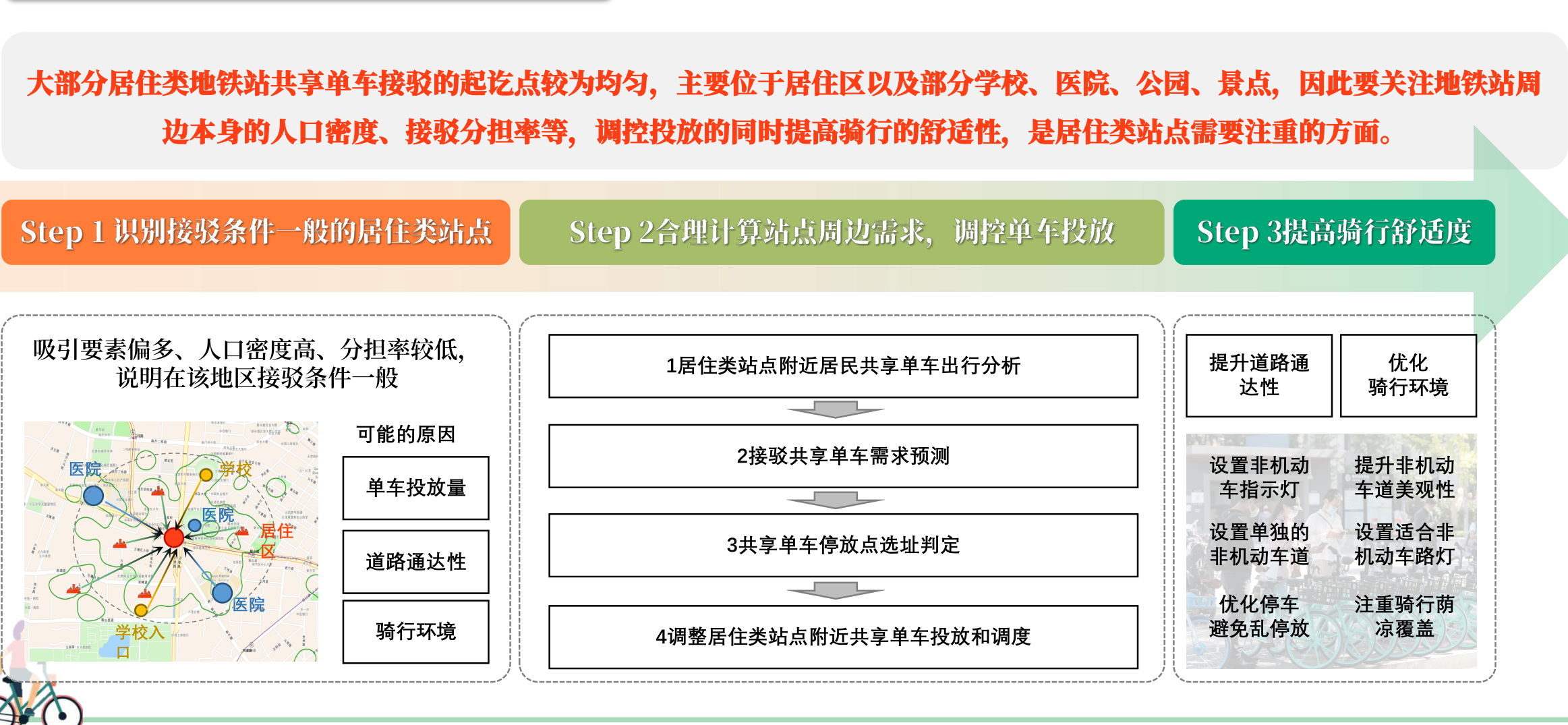
Optimization Guidelines for Residential Stations 居住类站点优化导则
Residential station guidelines
Fig. 13 Three-step optimization strategy for residential stations — Identify feeder conditions → Rational deployment & dispatch → Improve cycling comfort 图13 居住类站点三步优化策略——识别接驳条件 → 合理投放调度 → 提高骑行舒适度
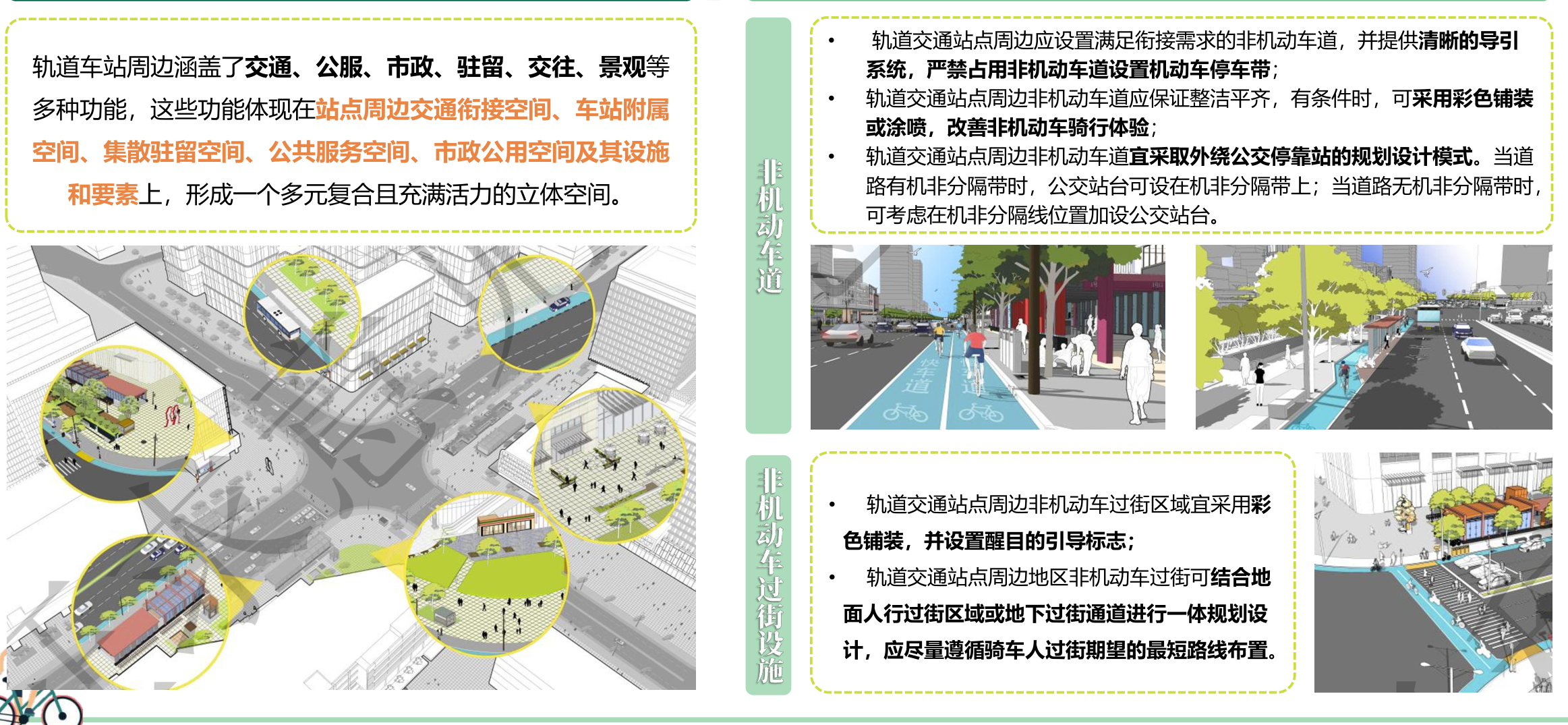
Optimization Guidelines for Commercial Stations 商业类站点优化导则
Commercial station guidelines
Fig. 14 Commercial stations: improve surrounding transit connection spaces · optimize non-motorized lanes · standardize colored pavement and directional signage 图14 商业类站点:改善周边交通衔接空间 · 非机动车道优化 · 彩色铺装与引导标志规范

08 · Conclusions

Research Conclusion 研究结论

Through fine-grained analysis of bike-sharing feeder data for rail transit, this study explores the spatiotemporal characteristics and influencing factors for different station types and proposes targeted optimization strategies. 研究通过精细化分析轨道交通接驳共享单车数据,探索不同类型站点接驳时空特征与影响因素,提出针对性优化策略。

1
Weekday feeder volume is higher; feeder frequency concentrates at 250–1,000 trips/day; ride duration 5–10 min, distance within 2 km. 工作日接驳量更高;接驳频率集中 250–1000 次/日;骑行时长 5–10 分钟,距离 2 km 以内
2
Feeder service area morphology falls into four types: Radial Expansion · Eccentric Expansion · Linear Expansion · Multi-core. 接驳服务范围形态分四类:放射扩展型 · 偏心扩展型 · 带状扩展型 · 多核心型
3
Residential stations (45) have the highest feeder demand; weekend feeder volume exceeds weekday, reflecting significant leisure travel characteristics. 居住类站点(45 个)接驳需求最高,周末接驳量大于工作日,体现显著的休闲出行特征
4
Composite Feeder Capability = 28.89% × Service Area + 40.96% × Feeder Volume + 30.15% × Modal Share. 综合接驳能力 = 28.89% × 接驳范围 + 40.96% × 接驳量 + 30.15% × 交通分担率
5
Residential population density and transportation land ratio have significant positive effects; land-use mix entropy has a significant negative effect on composite feeder capability. 居住人口密度、交通用地比例对综合接驳能力有显著正向影响;土地利用混合熵为显著负向影响
6
Differentiated optimization guidelines are proposed for residential, commercial, and mixed-use stations, covering spatial design, bike dispatch, and policy recommendations. 分类提出居住 · 商业 · 混合三类站点优化导则,涵盖空间设计、单车调度与政策建议三个层面
Future Work: ① Deepen pattern mining for different station types and add both intra-week and intra-day temporal dimensions; ② Refine guidelines from principles to concrete spatial design, improving feeder experience through micro-scale built environment improvements. 未来展望:① 深化不同类型站点规律挖掘,补充周内 / 日内双维度描述;② 细化优化导则,从导则落实到具体空间设计,通过建成环境微改造提升接驳体验。